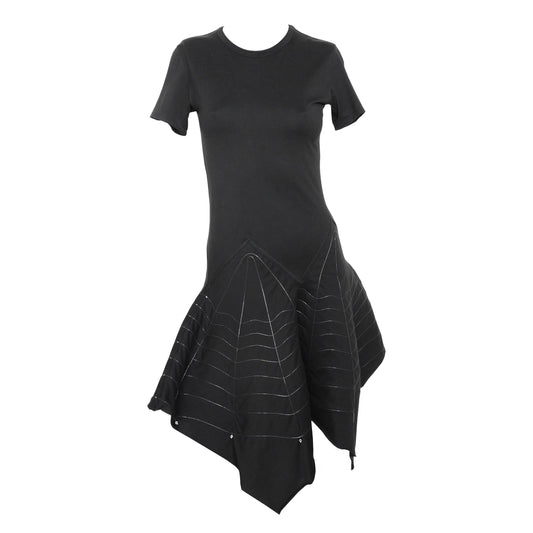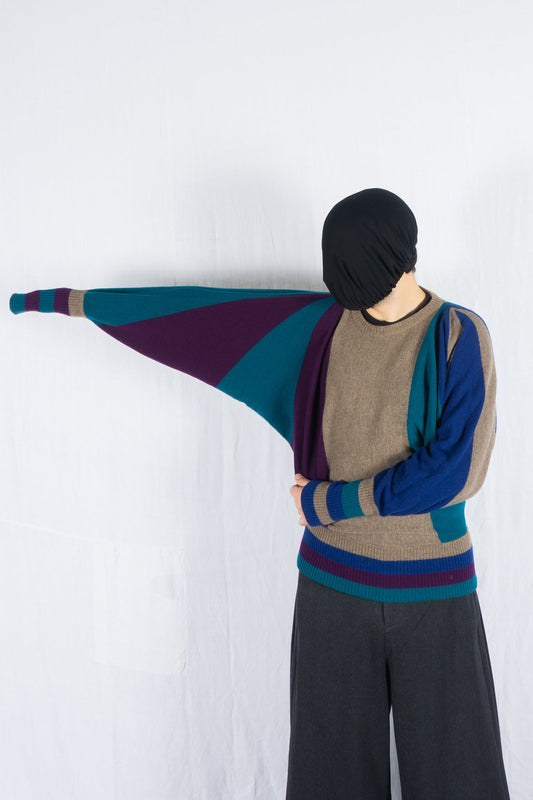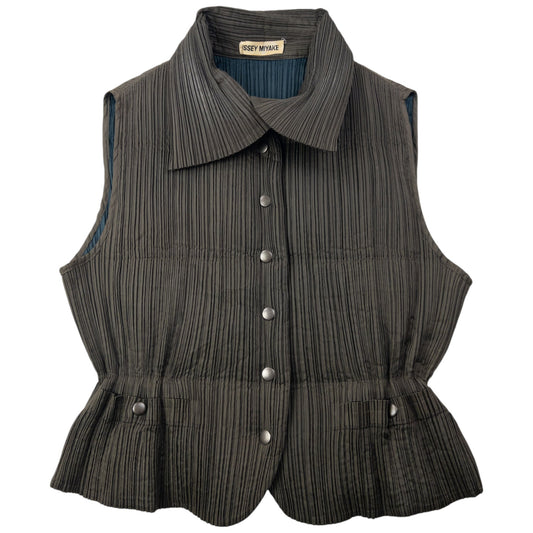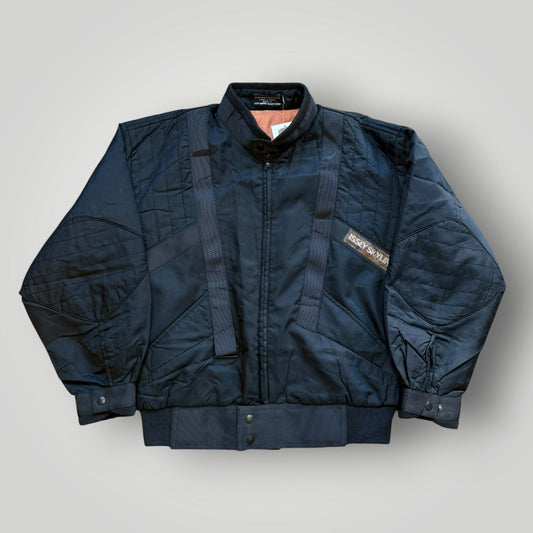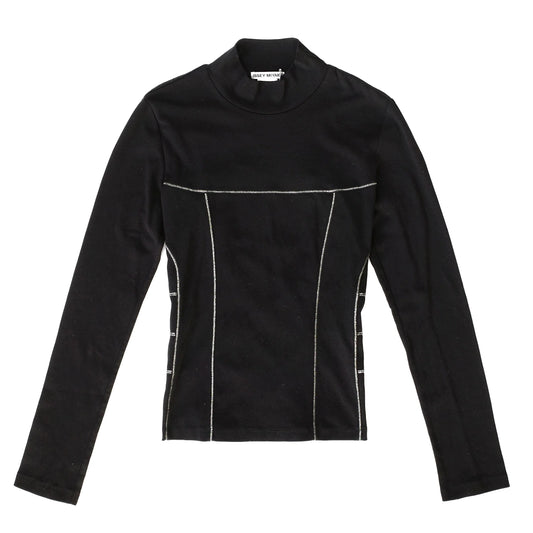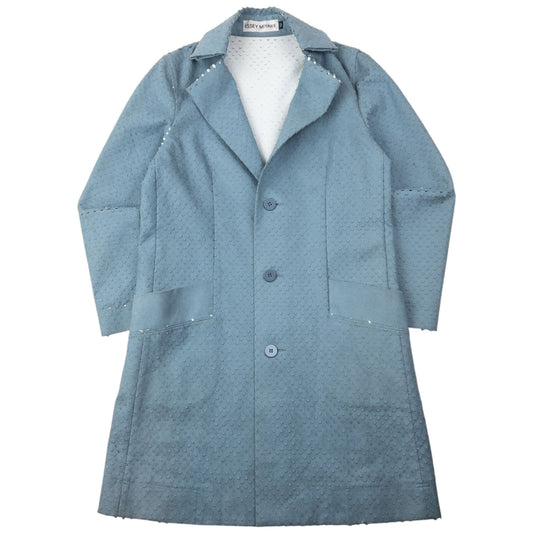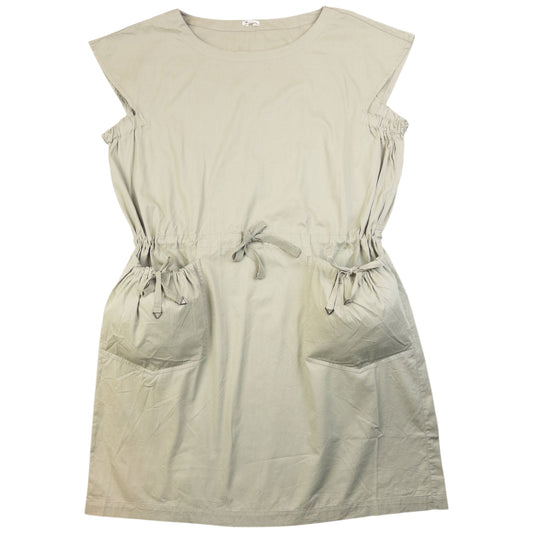
Miyake was born in Hiroshima in 1938 and survived the bomb at seven. He almost never spoke about it, and said only that he preferred to think about things that are made rather than things that are destroyed. A mantra so apt that I thought about stopping the eulogy here...
Miyake trained in Paris under Guy Laroche and Givenchy, then rejected couture's entire logic: the seasons, the status, clothes being built for a small number of bodies. So, he went back to Tokyo to ask a simpler question. What is the relationship between a body and a piece of cloth?
He kept returning to the idea of a single piece of fabric, the kimono, the wrap, cloth meeting the body without being cut to pieces. A-POC, "a piece of cloth", took that thought and ran it through an industrial knitting machine. A whole garment came out as one continuous tube, the shapes already built into the knit, the edges made so they would not fray. Customers would literally walk into stores and cut the fabric themselves. Cut here for a dress, here for a top, here for sleeves or no sleeves. You finished the garment, not the atelier. Nothing was wasted, and the person wearing it had a hand in making it.
Pleats Please worked the same way of thinking backwards. Miyake pleated the garment after it was sewn, not before, feeding finished clothes through a heat press so the pleats held for good. The result moved with the body, packed flat, washed in a sink, needed no iron, cost a fraction of couture. And became iconic.
Miyake's works were rooted in his belief that clothes should serve the person, not the other way round. They should free the body rather than shape it, work for anyone regardless of size, and be made without waste or fuss. He put engineering where other houses put prestige. Now we understand why "design is not for philosophy, it's for life".
Today We Celebrate Issey Miyake. His birthday a reminder that "design is not for philosophy, it's for life".